Free training guide
How to teach your dog a reliable recall in six steps
A strong recall means your dog comes back when called, even with distractions nearby. This guide walks through the foundation work, distraction training, and common mistakes that slow progress. Practice each step until your dog responds eagerly before moving to the next.
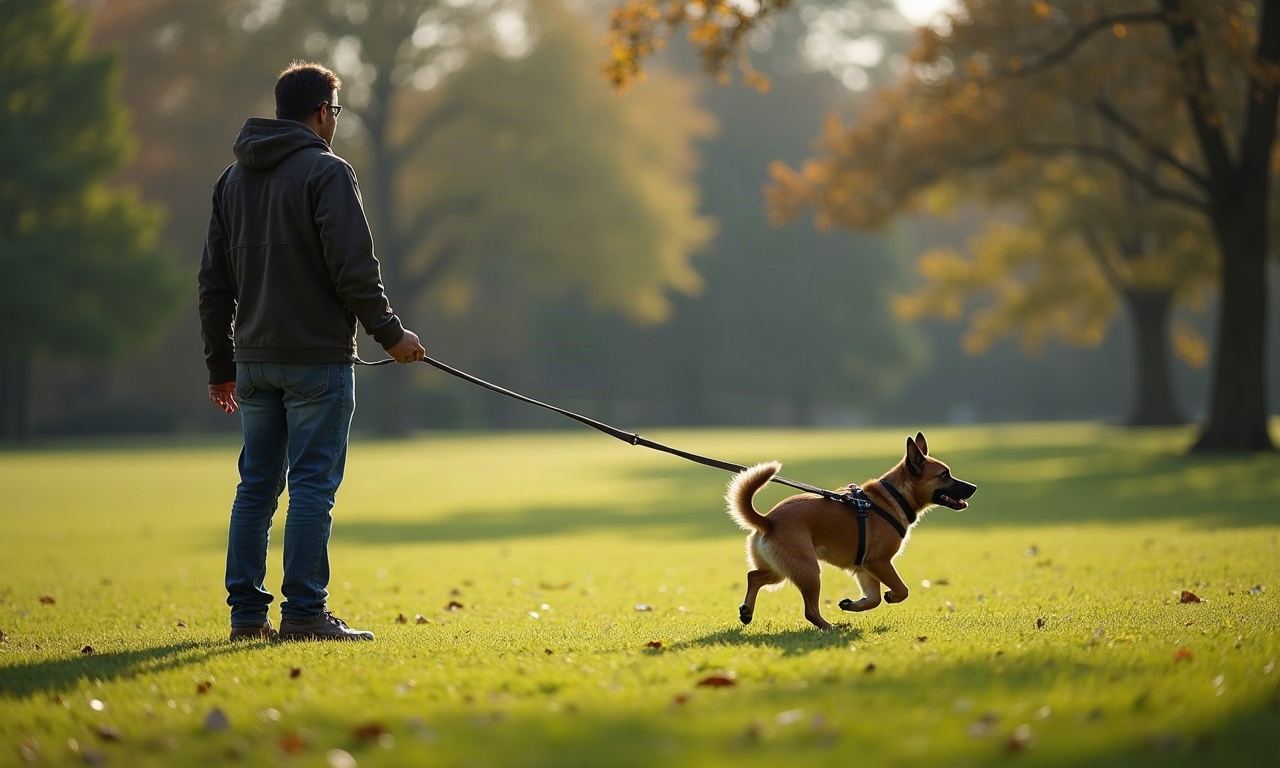
01Start indoors with no distractions and high-value rewards
Begin in a quiet room with your dog on a regular leash. Hold a treat or toy your dog loves. Say your recall cue once—use “come” or your dog's name—and take a few quick steps backward. When your dog moves toward you, mark the moment with “yes” and reward immediately when they reach you. Repeat this five or six times per session, twice a day. The goal is for your dog to associate the cue with running toward you and getting something great.
02Add distance with a long line in a fenced area
Move to a fenced yard or enclosed space and attach a 20- or 30-foot long line to your dog's collar or harness. Let your dog wander and sniff, then call the cue when your dog is not looking directly at you. If your dog turns and comes, reward heavily with multiple treats or a game of tug. If your dog ignores you, gently reel in the long line without repeating the cue, reward when your dog reaches you, and try again in a minute with less distance. Practice until your dog turns and runs to you from 20 feet away at least eight out of ten times.
03Introduce mild distractions one at a time
Set up simple distractions: a toy on the ground, a family member standing nearby, or a bowl of kibble a few feet away. Call your dog from ten feet away while the distraction is visible. If your dog comes immediately, reward with something better than the distraction—real chicken, cheese, or a favorite ball. If your dog hesitates or ignores you, the distraction is too strong; make it less interesting or increase the value of your reward. Work on one type of distraction until your dog responds reliably before adding a new one.
| Environment | Distance | Success rate to advance |
|---|---|---|
| Quiet indoor room | 5 to 10 feet | 9 out of 10 repetitions |
| Fenced yard with long line | 20 feet | 8 out of 10 repetitions |
| Yard with mild distractions | 15 feet | 8 out of 10 repetitions |
| New outdoor location with long line | 20 feet | 8 out of 10 repetitions |
| Enclosed space off-leash | 30 feet | 10 out of 10 repetitions |
Never repeat the cue
If your dog does not respond to the recall cue the first time, walk up and gently guide them back to you with the leash or long line, then reward. Repeating the cue teaches your dog that they can ignore it the first few times. One cue, one response, one reward.
04Practice in new locations with the long line still attached
Take your long line to a quiet park, an empty tennis court, or a friend's yard. New places carry new smells and sights, which make the recall harder. Start with short distances and high rewards, just as you did indoors. If your dog does not respond, move back to an easier environment for a few more sessions. The long line stays on until your dog turns and runs toward you immediately in at least three different locations.
05Test off-leash only in a fully enclosed space first
Before dropping the leash outdoors, test the recall off-leash indoors or in a fenced yard. Call your dog away from a toy, another person, or the back door. Reward every successful recall with something extraordinary: a handful of treats, a full minute of play, or access to something your dog wants. If your dog does not come or comes slowly, go back to practicing with the long line for another week. Off-leash freedom outside a fence comes only after consistent success in enclosed spaces.
06Maintain the behavior with random rewards and practice
Once your dog has a strong recall, keep it sharp by practicing twice a week and rewarding unpredictably—sometimes a single treat, sometimes a jackpot of five treats and praise. Never call your dog for something unpleasant like a bath or the end of playtime; walk up and leash your dog instead. If you notice your dog hesitating or ignoring the cue, return to long-line practice for a few sessions to rebuild the response.
Ready to start training or have questions about your dog?
Write through the contact form to schedule the free consultation or ask about programs and availability. We reply within one business day.